
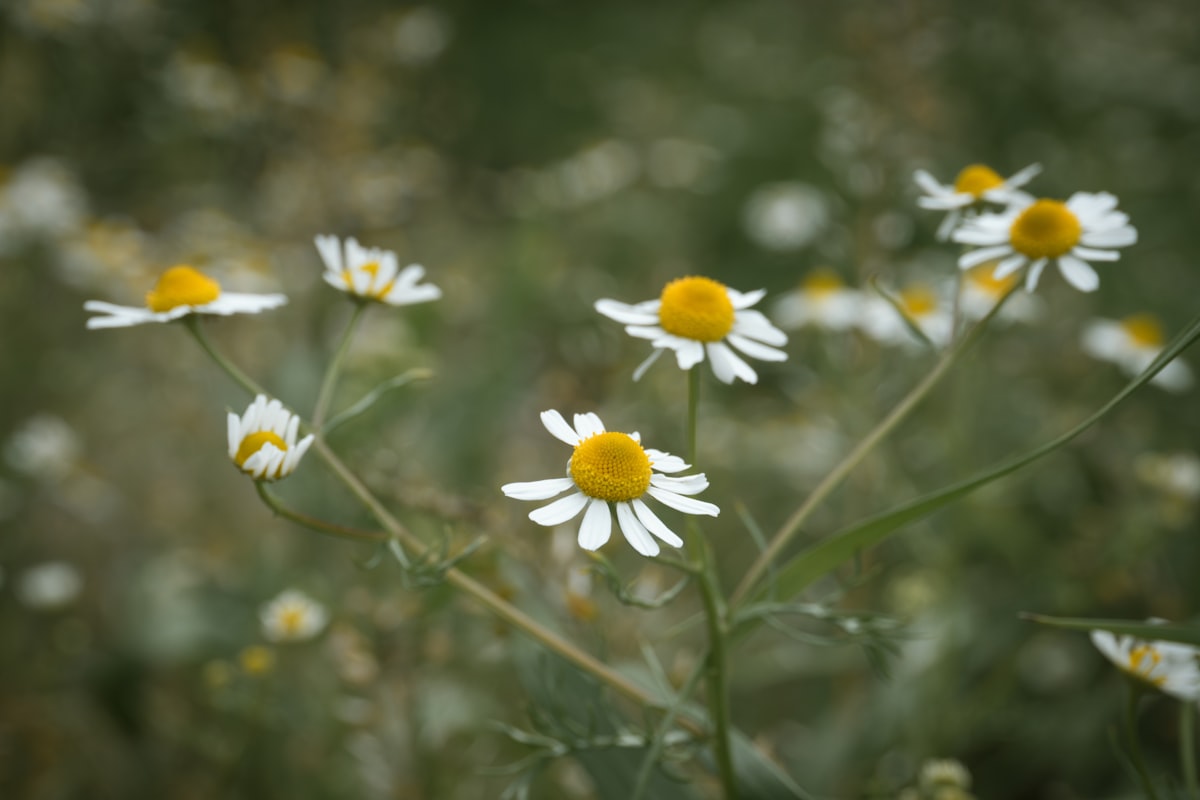
- Studies have reported a beneficial effect of chamomile in relation to sleep quality.
- The evidence score is 93, and the reliability is described as high.
- This information is useful for people who want to check whether changes occur in their sleep.
Chamomile is a plant used in the form of essential oil or extract.
It is sometimes used or ingested in combination with other plants in the context of aromatherapy.
There are 2 studies on how the scent of chamomile relates to sleep.
One is a report on directly inhaling the scent.
There is a small-scale study result involving 80 young people aged 18 to 35 with a tendency toward insomnia. In this study, participants inhaled the scent of chamomile oil before bed for 15 days. It has been shown that inhaling the scent of chamomile may reduce the degree of insomnia and improve sleep quality.
Technically, a randomized controlled trial (a highly reliable research method in which participants are randomly divided into groups to compare effects) was used. In other words, a study was conducted with matched conditions to check for differences caused by a specific factor.
The other is a report on a usage method incorporating massage.
There is a study with a relatively substantial sample, involving 105 patients undergoing burn treatment. In this study, aromatherapy massage using lavender and chamomile oil was performed. As a result, effects on anxiety and sleep quality have been reported. This can be described as the result of a study using a non-pharmacological method (an approach using physical stimulation and so on, without the use of medication).
The reported content also differs depending on the age group targeted and the method of use.
First, there is a broad summary study targeting adults.
This combines and analyzes the results of multiple previous studies. This study includes a wide range of adults, from healthy people to those with disease.
It has been suggested that sleep may improve in relation to the number of nighttime awakenings and sleep continuity, among other factors.
Technically, this was conducted using a systematic review (a method that carefully examines papers carefully selected based on predetermined rules for a specific topic) and a meta-analysis (a method that statistically combines and analyzes the results of individual studies). In other words, many scattered pieces of data have been brought together to derive an overall trend.
Next, there is a study targeting older adults.
There is a small-scale study result involving 60 older adults aged 60 and above. When chamomile extract was taken for 28 days, an improvement in sleep quality was reported. This study was based on a clinical trial (a trial that verifies effects in an environment close to real-world conditions).
While this study's findings are described as highly reliable, there are also some limitations.
First, some of the individual studies included had relatively small numbers of participants. Therefore, not everyone will feel the same way. It should be understood that it may not suit everyone. In addition, what has been presented here concerns reports on sleep, and effects on other symptoms have not been addressed. It would be best to consider whether to incorporate this into your own life based on the range of the current research data.
| Study | Design | Number of Participants | Duration | Main Result |
|---|---|---|---|---|
| International Journal of Psychiatry in Medicine (2025, PMID:39545336) | Randomized controlled trial (RCT) | 80 | 15 days | A beneficial effect was reported |
| Burns: Journal of the International Society for Burn Injuries (2020, PMID:31859096) | Randomized controlled trial (RCT) | 105 | Unknown | A beneficial effect was reported |
| Complementary Therapies in Medicine (2024, PMID:39106912) | Meta-analysis | 772 | Unknown | A beneficial effect was reported |
| Complementary Therapies in Medicine (2017, PMID:29154054) | Randomized controlled trial (RCT) | 60 | 28 days | A beneficial effect was reported |
The total number of study subjects is 1,017. This includes 80 young adults aged 18 to 35 with insomnia, 105 burn patients, 772 adults (including both healthy people and those with disease), and 60 older adults aged 60 and above.
Since the age groups and conditions of the subjects vary widely, this can serve as a reference for considering your own situation.
The number of studies is 4.
The study designs include randomized controlled trials (RCTs) and meta-analyses.
The wide variety of subject characteristics can also be noted as a feature of these studies.
How is chamomile used?
Uses such as inhalation as an essential oil, aromatherapy massage, and ingestion of an extract have been studied. These usage examples have been shown.
Who has been studied in chamomile research?
Studies have been conducted on people in various situations, including young adults with insomnia, burn patients, and older adults. The subjects total 1,017.
To what extent has the relationship between chamomile and sleep been reported?
Studies reporting a beneficial effect on sleep quality have been published with high reliability. 4 studies have been conducted so far.
Multiple studies have suggested that chamomile may support sleep quality. The evidence score is also high, and reports have been made linking the use of the scent and ingestion of the compound to sleep. This information is based solely on research, and there are aspects that cannot be said to be certain due to constraints such as the number of participants. Why not start by reflecting on your own condition with the self-check assessment?