
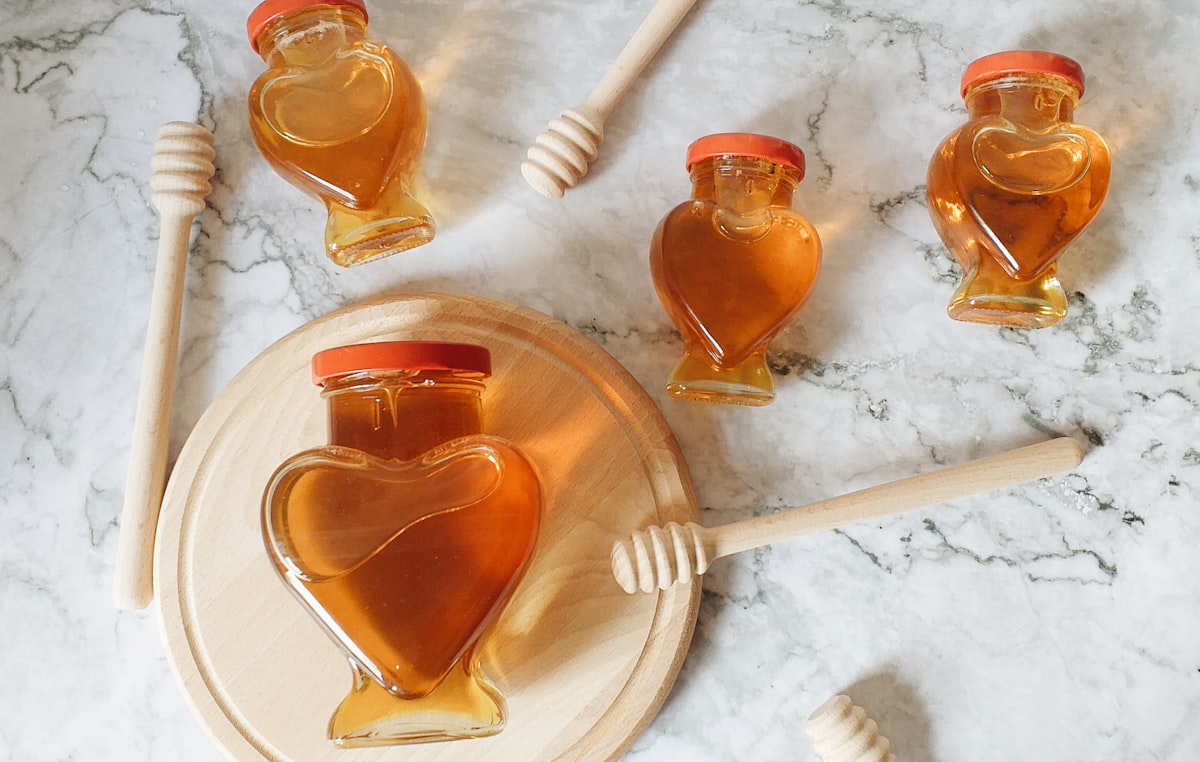
- There are reports that honey may have a beneficial effect on sleep quality.
- The evidence score is 71, and the reliability is described as high.
- These findings relate to sleep problems caused by coughing in children and to the sleep state of hospitalized patients.
Honey is a natural sweetener made by bees collecting flower nectar and other substances.
It is generally consumed as a food and is used in a variety of settings.
Studies have reported that honey may have a beneficial effect on sleep quality.
Three studies have been conducted so far, and their content varies widely. One targeted children whose nighttime sleep is disrupted by symptoms such as coughing. There is a study of 105 children with an upper respiratory tract infection (a condition in which the entrance area of the respiratory tract, such as the nose and throat, becomes infected). The study was conducted using a method in which honey was given once, 30 minutes before bedtime. This was carried out as a randomized controlled trial (a highly reliable research method in which participants are divided into groups to compare effects). As a result, it was reported that, for coughing and difficulty sleeping, parents rated symptom relief from honey most favorably.
There is also another study of 300 children aged 1 to 5. Here too, a tendency was seen for honey products to be rated more highly than other extracts for coughing and difficulty sleeping. These studies involved comparisons using a placebo (a fake medicine that looks the same as the real medicine but does not contain the active ingredient). In other words, it has been shown that honey produces a distinctive result — not just "somehow," but compared with doing nothing or giving another substance.
Another case involves adults. The subjects were 68 people hospitalized with acute coronary syndrome (a condition involving problems such as blocked blood vessels in the heart). There is a report that consuming a mixture of milk and honey improved the state of sleep.
The studies conducted so far are based on mechanisms designed to increase scientific reliability.
Both of the studies on children mentioned earlier were conducted as randomized controlled trials (a method in which participants are randomly divided into groups to compare effects). This information comes from multiple trials involving a total of 473 participants. By using such methods, the results are carefully verified while checking whether they could be due to chance.
The age groups and situations targeted also differ. In the studies on children, including infants and toddlers, evaluation from the parents' perspective was used. On the other hand, in the case of hospitalized patients, the report concerns the state of sleep. In this way, the focus of investigation changes depending on the situation, but it can be said that the possible relationship between honey and sleep quality continues to be examined.
The research data also includes some limitations that should be understood.
First, some of the studies mentioned here are small in scale, with fewer than 100 participants. This data is based on research at a scale of 473 participants in total. Therefore, further examination may still be needed to determine whether these results apply to everyone.
In addition, many of the trials targeting children looked at short-term changes following a single dose. What happens with continued use over a longer period cannot be determined from this data. It may not suit some people, and there are people for whom the effect does not appear. It is important to regard the research results simply as a "trend" and to consider them in light of your own physical condition.
| Study | Design | Number of Participants | Duration | Main Result |
|---|---|---|---|---|
| Archives of Pediatrics & Adolescent Medicine (2007, PMID:18056558) | Randomized controlled trial (RCT) | 105 | 1 day | A beneficial effect was reported |
| Pediatrics (2012, PMID:22869830) | Randomized controlled trial (RCT) | 300 | 1 day | A beneficial effect was reported |
| Clinical Nutrition ESPEN (2018, PMID:30390870) | Randomized controlled trial (RCT) | 68 | 3 days | A beneficial effect was reported |
The study subjects total 473 people. This breaks down into children aged 2 to 18 with an upper respiratory tract infection (105 and 300, respectively) and 68 patients hospitalized with acute coronary syndrome.
Since the study subjects range broadly from children to hospitalized patients, this can serve as a reference for considering your own situation.
The number of studies is 3. All of these studies are based on randomized controlled trials (RCTs).
Some also had short study periods, such as 1 day or 3 days.
What happens to sleep quality when honey is consumed?
A: Studies have been reported suggesting that honey may have a beneficial effect on sleep quality. 3 such studies have been confirmed.
Is there research on the effect of honey on nighttime coughing in children?
A: In a study of children with an upper respiratory tract infection, there is a report concerning nighttime coughing. Within it, cases are cited in which parents gave a positive evaluation regarding symptom relief.
Has research using honey been conducted on hospitalized patients?
A: A study using a mixture of milk and honey has been conducted on patients hospitalized with acute coronary syndrome. There is a report of changes seen in the state of sleep.
Multiple studies have shown reports that honey may have a beneficial effect on sleep quality. There is data relating to sleep difficulties associated with coughing in children and the sleep state of hospitalized patients. However, since some of the studies included have limited participant numbers and durations, the same results cannot be guaranteed for everyone.
Please also try the self-check assessment to understand the state of your own sleep.