
- It has been suggested that L-theanine may support conditions related to sleep quality and daytime sleepiness.
- The evidence score is 73, and reliability is reported to be high.
- This information is for people concerned about how they rest at night or about their condition during daytime activity.
L-theanine is known as a component of tea and other sources.
It is sometimes consumed in various contexts of health maintenance, and is sometimes combined with other ingredients.
There are reports of a positive change regarding the decline in function caused by daytime sleepiness. In a study with 100 participants who had chronic stress, continuous intake for 56 days showed a tendency for the effects of daytime sleepiness to be reduced at both the 28-day and 56-day points. This trial was conducted as a randomized controlled trial (a highly reliable research method that randomly divides participants to compare effects). In other words, it has been shown that under specific conditions, some change may be brought about in sleep-related daytime condition.
There are also reports concerning falling asleep and light sleep. In a small-scale study of 30 healthy adults without mental illness, taking 200mg of L-theanine per day for 4 weeks resulted in a decrease in sleep latency (the time from getting into bed to falling asleep), nighttime sleep trouble, and the use of sleeping medication. This is based on the result of a randomized controlled trial (a highly reliable research method that randomly divides participants to compare effects) using a placebo (a substance that actually contains no active ingredient, used for comparison). In other words, it can be said that there may be a relationship with sleep indicators such as ease of falling asleep.
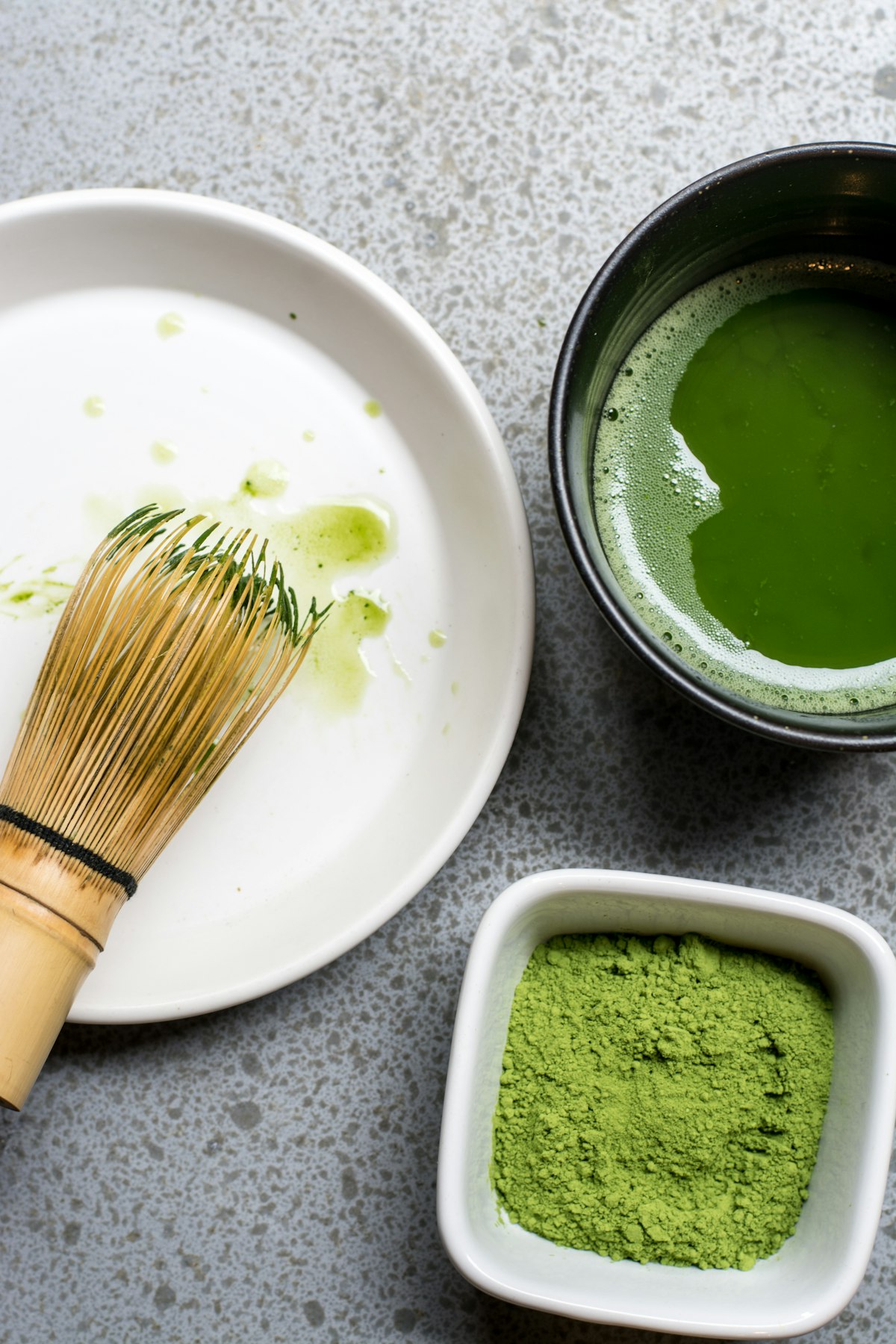
There is also research on intake in the form of matcha. Daily intake of matcha for 12 months suggested the possibility that emotional perception and sleep quality improved. This study had 99 older adults participating, and the survey was conducted continuously for 1 year targeting people with mild cognitive decline. This has been carried out as a randomized controlled trial (a highly reliable research method that randomly divides participants to compare effects). In other words, from a long-term perspective, the effect on sleep quality has been examined.
There are also reports, at the animal-experiment stage (research conducted using mice, rats, and similar animals rather than humans), on a synergistic action from combining L-theanine with other ingredients. When GABA (one of the neurotransmitters in the brain) and L-theanine are taken together as a mixture, results show that this brings a positive synergistic effect on sleep quality and sleep duration compared with L-theanine alone or GABA alone. In other words, it has been suggested that combining ingredients may produce a stronger effect.
| Study | Design | Number of Participants | Duration | Main Result |
|---|---|---|---|---|
| Nutrients (2022, PMID:35565828) | Randomized controlled trial (RCT) | 100 people | 56 days | A positive effect was reported |
| Nutrients (2019, PMID:31623400) | Randomized controlled trial (RCT) | 30 people | 28 days | A positive effect was reported |
| PloS one (2024, PMID:39213264) | Randomized controlled trial (RCT) | 99 people | 365 days | A positive effect was reported |
| Pharmaceutical Biology (2019, PMID:30707852) | Animal experiment | Unknown | Unknown | A positive effect was reported |
The research targets 100 healthy adults with chronic stress. It also includes 30 healthy adults without mental illness and 99 older adults with mild cognitive decline.
These studies include people experiencing stress and older adults. This can therefore serve as a reference when considering how people in circumstances close to your own might respond.
There are 4 studies considered in total.
Of these, 3 are randomized controlled trials (RCTs) in humans, and 1 is an animal experiment.
Because results from an animal experiment are included, caution is needed regarding whether all the data directly applies to humans.
What reports are there on L-theanine and sleep quality?
A: Research has been reported showing a positive effect on sleep quality. Specifically, there are examples where changes were seen in indicators such as the time it takes to fall asleep and disturbances during sleep.
What data exists on taking L-theanine together with other ingredients?
A: Results from an animal experiment have been reported showing that combining it with an ingredient such as GABA produced a synergistic effect on sleep quality and duration. This is based on comparison with taking GABA or L-theanine alone.
What kinds of research exist on L-theanine intake in older adults?
A: In research targeting older adults with mild cognitive decline, there are reports suggesting that intake in the form of matcha may have a positive effect on emotional perception and sleep quality.
The safety of L-theanine has been examined in multiple clinical trials in humans.
No serious adverse events have been reported. An analysis published in 2026 that combined 31 randomized controlled trials (a total of 1,168 participants) compared adverse events with a group that took a placebo (a look-alike substance containing no active ingredient), and concluded that "no serious adverse events were reported." In individual trials, some reported mild content such as slight gastrointestinal discomfort, headache, and irritability, but the frequency of these was reported not to differ greatly from the group that took the placebo. However, it may not suit some people depending on their constitution.
Intake amounts examined in research. The amounts used in trials were mainly 200-400mg per day, and a trial using up to 900mg over 8 weeks has also been reported. On the other hand, no upper daily intake limit set by a public authority was found in this survey. This does not mean "there is no upper limit" — it refers to the fact that no upper limit has been established.
For those taking medication. Regarding interactions with antihypertensive drugs (drugs that lower blood pressure), psychostimulants, sleeping medication, and similar, although there are theoretical concerns, no clinical research or reports that actually confirmed this were found in this survey. As a precaution, those currently taking these medications should consult a doctor or pharmacist before taking it.
For those who are pregnant or breastfeeding, and children. Regarding safety for those who are pregnant or breastfeeding and for children, sufficient human trial data was not found, and it has been confirmed neither as "safe" nor as "dangerous." In fact, application documents overseas also exclude those under 18, and those who are pregnant or breastfeeding, from their scope. If you fall into these categories, please do not take it based on your own judgment, and consult a doctor.
In terms of regulatory status, in the United States there are multiple GRAS notifications (a system in which authorities respond with "no objection" to a company's own safety determination, which differs from safety approval by the authorities). In Europe (the EU), the approval procedure as a novel food had not been completed as of this survey.
All of the above content has been summarized within the scope of research and public materials that could be confirmed at this time. If you have concerns about your health, or have a pre-existing condition or are taking medication, please consult a doctor or pharmacist.
Multiple studies suggest that L-theanine may have a positive effect on conditions related to sleep quality and daytime sleepiness. The evidence score is 73, and reliability is considered high. However, caution is needed regarding the fact that the research includes animal experiments and that results differ from person to person.
Please also make use of the self-check assessment to review your own sleep style.